


Seven Workshops. Four Countries. One Shared Momentum for Cyber-Driven Innovation


Over the past months, InnovaCyBridge delivered seven in-person workshops across four partner countries, bringing together researchers, students, academics, entrepreneurs, startups, and ecosystem actors around a shared question. How do we turn cybersecurity knowledge, digital innovation, and EU funding opportunities into real, sustainable impact.
Each workshop had its own local character, shaped by regional ecosystems and participant profiles. Yet a consistent atmosphere emerged across all locations. Rooms were full. Discussions were candid and practical. Questions moved quickly from theory to application.
What followed was not just a series of events, but a growing, connected learning experience across Europe.
A Shared Energy Across All Locations


Across all workshops, sessions quickly evolved beyond presentations. Participants actively worked through real challenges, exchanged perspectives, and applied concepts directly to their own ideas and projects.
Core focus areas included:
Identifying suitable EU funding pathways for research and innovation ideas
Structuring competitive and credible project proposals
Understanding how cybersecurity increasingly cuts across all innovation domains
Using AI tools to support proposal development and strategic framing
Building effective partnerships between academia, startups, and industry
This applied approach was consistently reflected in participant feedback.

“The lectures delivered by the InnovaCyBridge project partners were extremely valuable, providing us with fresh insights and practical tools that we can now apply to enhance the quality and success of our future project proposals.” Prof. Nikola Puvača, PhD, Vice-dean for International Cooperation at Faculty of Economics and Engineering Management
Country and University Highlights
Innovation and Funding Nights
Heraklion, Greece (hosted by Hellenic Mediterranean University)
The Innovation and Funding Nights in Heraklion unfolded as a two-day evening programme, creating a focused yet energetic learning environment for academics, entrepreneurs, and innovation-driven participants.

Day one centred on private investment readiness and the strategic use of AI in proposal writing. Participants explored how funding decisions are shaped, where AI can accelerate proposal development, and where human judgment remains critical. Discussions were practical and candid, reflecting real challenges faced by early-stage innovators and researchers.
Day two shifted toward EU funding opportunities and long-term collaboration. Sessions focused on Horizon Europe and Erasmus+ pathways, followed by a hands-on workshop on strategic partnerships and impact positioning.
The two-day structure allowed participants to move progressively from funding awareness to strategic alignment, reinforcing the importance of sustained collaboration beyond individual calls.
The strong attendance and continued engagement across both evenings highlighted a clear appetite for structured, practical guidance that connects innovation, funding, and impact.

Innovation & Grant Day and Startup Opportunities Night: Grants, Networks & Growth
Budapest, Hungary (hosted by Budapest University of Technology and Economics)
In Budapest, the programme at the Budapest University of Technology and Economics was built around two complementary workshops, supported by an additional consultancy session on concept development.


The morning workshop focused on EU funding opportunities and proposal readiness, guiding participants through funding strategy, evaluation criteria, and positioning ideas for competitiveness. This session was followed by a dedicated consultancy on concept development, where researchers and academics received more focused guidance on refining their ideas and clarifying next steps.
The second workshop, delivered later in the day, targeted a broader innovation and startup audience. Discussions centred on startup opportunities, innovation pathways, AI-supported proposal development, and bridging academic knowledge with entrepreneurial execution. The progression from structured learning to applied discussion created a dynamic and highly engaged atmosphere.


Together, the workshops and consultancy reinforced the importance of combining funding literacy with concept maturity, reflecting current trends in innovation-driven entrepreneurship.
Innovation Day
Novi Sad, Serbia (hosted by University Business Academy in Novi Sad)
The Innovation Day in Novi Sad was structured around two distinct workshops tailored to different audiences, creating focused and relevant learning spaces throughout the day.

The first workshop engaged academic staff, researchers, and PhD candidates, concentrating on EU funding pathways, proposal structuring, and the strategic use of AI tools to support project preparation. Discussions focused on how research ideas can be framed more clearly around impact, feasibility, and funding logic.
The second workshop, delivered later in the day, welcomed startups, entrepreneurs, and innovation-oriented participants. This session shifted the focus toward practical application, partnership building, and translating ideas into fundable and scalable initiatives. The two-workshop structure allowed participants to engage deeply within their own context while contributing to a shared innovation narrative.
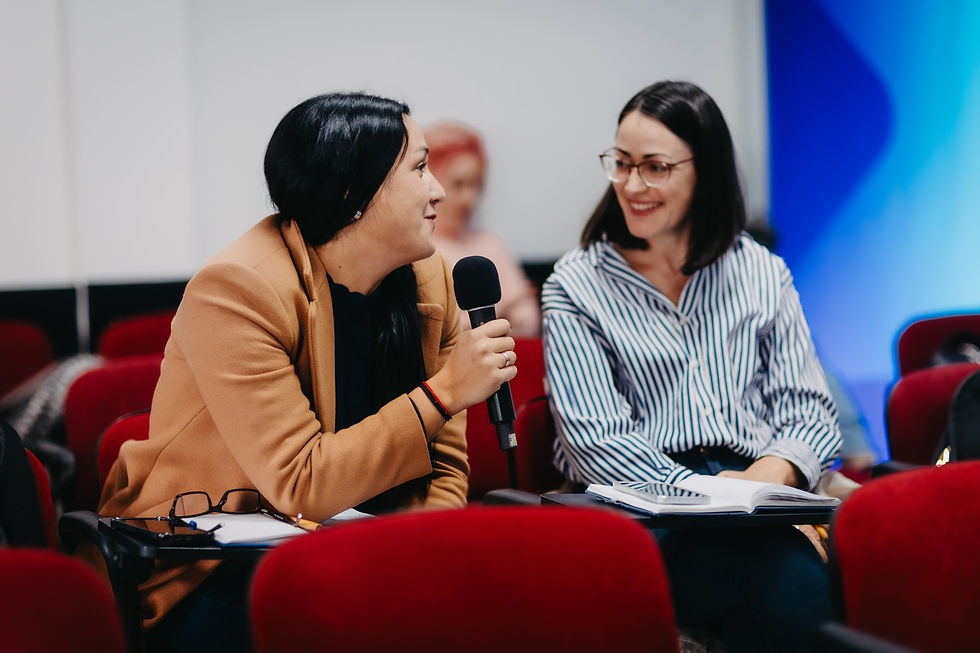
Participant feedback reflected the value of this targeted approach, highlighting clearer understanding of proposal expectations and stronger confidence in developing competitive submissions.
As one participant noted:
“The sessions improved our ability to create impactful, creative, and competitive project proposals and broadened our perspective on EU opportunities.” Tamara Radević, Project Office Administrative Assistant
EU Funding Pathways Workshops
Birmingham, United Kingdom (hosted by Aston University)
The Innovation and Funding Workshops held at Aston University in Birmingham brought together researchers, academic staff, and innovation professionals focused on strengthening funding readiness and real-world impact. The sessions were highly interactive, with participants actively engaging in discussions around proposal structure, funding strategy, and how cybersecurity and digital resilience increasingly influence evaluation criteria across EU calls.

Feedback from participants highlighted the practical value of the workshops, particularly the clarity gained around funding pathways and proposal expectations. Several attendees noted that the sessions helped demystify the EU funding landscape and provided concrete frameworks they could immediately apply to their own work.
Participants also emphasised the relevance of the content to current research and innovation practice, noting that the workshops helped connect strategic thinking with actionable next steps. The strong engagement reflected a wider trend within the UK ecosystem, where interdisciplinary collaboration, impact orientation, and funding literacy are becoming essential components of successful innovation activity.


Learning That Mirrors Current Trends
Across all four partner universities, similar themes consistently emerged.
Participants highlighted:
The growing expectation that innovation projects integrate cybersecurity by design
The need for clearer pathways from research to commercialization
The increasing role of AI as a practical support tool in proposal development
The importance of understanding funding strategy, not just funding calls
As one academic participant shared:
“Lectures were very inspiring and gave us real examples and good knowledge for writing good project proposals and hopefully getting more funding from the EU.” Prof. Ivana Brkić, PhD, Vice-dean for Quality and Development at Faculty of Economics and Engineering Management
These insights reflect a broader shift across European innovation ecosystems. Competitive projects now require not only strong ideas, but also strategic clarity, security awareness, and cross-sector collaboration.
Beyond Workshops. Mentoring and Targeted Engagement
In several countries, workshops were complemented by one-to-one mentoring sessions and targeted ecosystem meetings. These activities allowed participants to:
Receive tailored feedback on concrete project ideas
Clarify next steps for funding, partnerships, or incubation
Translate workshop insights into immediate and practical action
This layered approach. Combining group learning with individual support. Strengthened the overall impact of the workshops and supported participants at different stages of readiness.
What This Phase Shows
Taken together, the seven workshops send a clear message.
Across regions and institutions, there is strong demand for applied, practice-oriented support at the intersection of cybersecurity, entrepreneurship, and EU funding.
Participants are not questioning whether to engage with innovation opportunities. They are seeking effective, sustainable ways to do so.
The diversity of local contexts, combined with shared challenges, confirms the value of InnovaCyBridge’s approach to knowledge transfer, ecosystem engagement, and institutional capacity building.
Looking Ahead
These workshops mark an important milestone for InnovaCyBridge. They also lay the groundwork for what comes next.
Insights gathered across Aston University, HMU, BME, and UBANS will directly inform:
Expanded training and mentoring activities
Deeper collaboration between partner ecosystems
New opportunities for researchers, startups, and institutions to move from ideas to implementation
The momentum is clear. The conversations are active. The next phase will build on this foundation to scale impact across Europe.

Comments